
What Makes a Jungle Resort the Best in South India?
South India is home to some of the most remarkable wilderness landscapes in the country. From the dense rainforests of the Western Ghats to the tiger reserves of Karnataka, Kerala, and Tamil Nadu, the region offers travelers an extraordinary opportunity to experience nature at its most vibrant and untamed.
Over the past decade, jungle resorts have emerged as one of the most sought-after travel experiences in India. Travelers today are no longer satisfied with simply visiting a destination — they want to live within the landscape, experience its biodiversity, and reconnect with nature in meaningful ways.
But with many forest retreats emerging across the region, a common question arises among travelers:
What truly makes a jungle resort the best in South India?
The answer lies not in luxury alone, but in the balance between location, authenticity, sustainability, and immersive experiences.
1. Location Within a Biodiversity Hotspot
The most defining feature of a great jungle resort is its location.
South India’s forests form part of the Western Ghats, a UNESCO World Heritage Site recognized as one of the eight “hottest hotspots” of biodiversity in the world. According to UNESCO, the Western Ghats host over 7,400 species of plants, animals, birds, amphibians, reptiles, and fish, many of which are found nowhere else on Earth.
Resorts located near protected landscapes such as Mudumalai Tiger Reserve, Bandipur National Park, and Wayanad Wildlife Sanctuary offer travelers a front-row seat to this extraordinary ecosystem.
Being situated close to wildlife corridors dramatically increases the chances of encountering rare species such as:
- Asian elephants
- Indian gaurs
- Malabar giant squirrels
- Hornbills and endemic bird species
- Leopards and, occasionally, tigers
A jungle resort that truly embraces its location allows guests to experience the forest rather than simply observe it from afar.
2. Architecture That Blends with Nature
The best jungle resorts do not dominate the landscape — they blend into it.
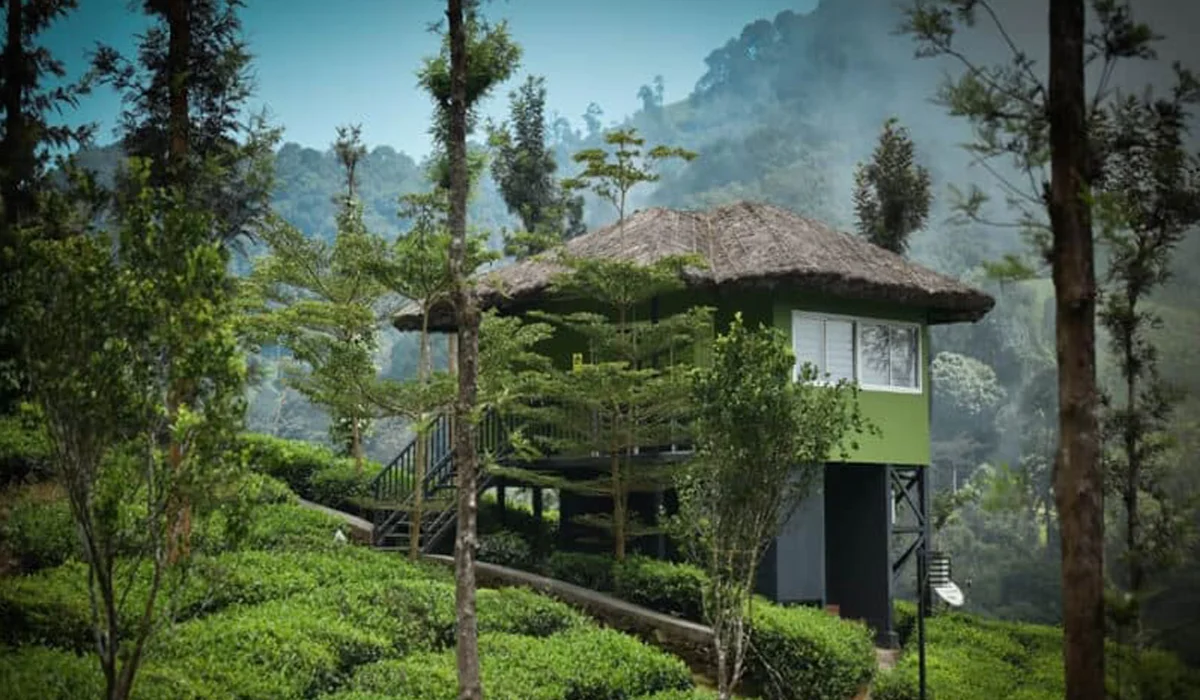
Thoughtfully designed forest lodges often use natural materials, elevated structures, and open architecture to ensure minimal disturbance to the surrounding ecosystem. Large balconies, wide windows, and outdoor spaces are designed to frame the forest itself as the primary attraction.
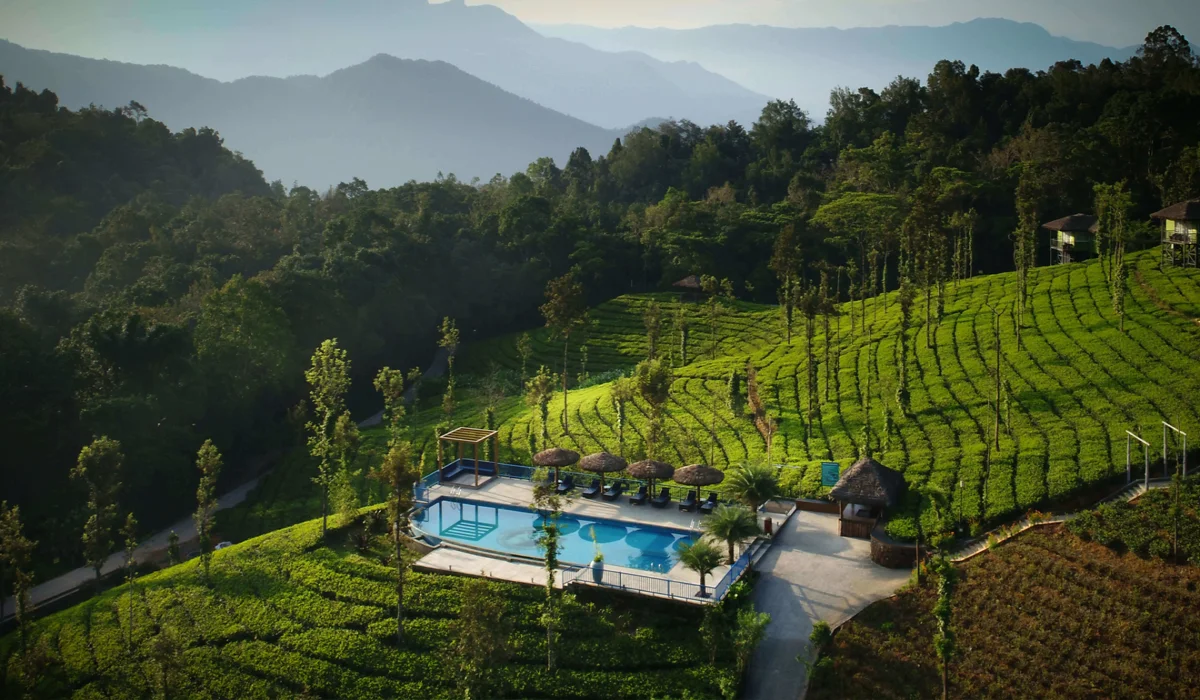
In many cases, cottages are positioned to overlook valleys, rainforest canopies, or tea plantations that stretch across the slopes of the Nilgiris.
This design philosophy ensures that luxury complements nature instead of competing with it. Guests enjoy modern comforts while remaining constantly connected to the wilderness around them.
The result is a stay that feels immersive rather than isolated from nature.
3. Access to Authentic Nature Experiences
One of the most important aspects of a jungle resort experience is the opportunity to engage directly with the natural environment.
Unlike conventional hill-station tourism that focuses primarily on sightseeing, forest resorts create experiences that allow guests to explore and understand the ecosystem.
These activities often include:
- Guided rainforest walks
- Bird-watching sessions with naturalists
- Plantation walks through tea and spice estates
- Trekking in surrounding hills
- Wildlife safaris in nearby national parks
According to a 2023 travel trend report by Booking.com, more than 70% of global travelers prefer nature-based activities when visiting mountain destinations.
This growing interest in experiential travel has made jungle resorts an ideal choice for travelers seeking adventure combined with relaxation.
4. Biodiversity at Your Doorstep
One of the most magical aspects of staying in a true jungle resort is that wildlife encounters often happen unexpectedly.
Guests may wake up to the distant call of a Malabar whistling thrush, often referred to as the “whistling schoolboy” of the Western Ghats.
A morning walk might reveal colorful bird species such as:
- The Great Indian Hornbill
- Malabar Trogon
- Scarlet Minivets
- Fairy Bluebirds
At dusk, the forest transforms again, as the sounds of cicadas and night creatures fill the air.
Resorts located within biodiverse landscapes often become natural habitats themselves, attracting birds, butterflies, and small mammals that coexist within the property.
For nature enthusiasts, photographers, and bird watchers, this creates an experience that cannot be replicated in urban resorts.
5. Sustainable and Eco-Conscious Hospitality
Sustainability is increasingly becoming a defining factor for travelers when choosing accommodation.
A report by Expedia’s Sustainable Travel Study found that more than 65% of travelers prefer staying at eco-friendly properties that actively work to reduce environmental impact.
The best jungle resorts in South India incorporate sustainability through practices such as:
- Responsible waste management
- Energy-efficient architecture
- Water conservation systems
- Supporting local communities and employment
- Preserving natural forest landscapes within the property
By prioritizing ecological responsibility, these resorts ensure that tourism contributes to conservation rather than exploitation of natural habitats.
6. A Balance Between Adventure and Comfort
A jungle stay should offer excitement without compromising comfort.
After a day spent trekking through rainforests or exploring wildlife reserves, guests expect a space that allows them to relax and recharge.
The best resorts provide:
- Spacious nature-inspired villas and cottages
- Scenic balconies overlooking forests and mountains
- Curated dining experiences featuring regional cuisine
- Wellness and relaxation spaces
Luxury in a jungle setting is less about extravagance and more about creating a tranquil environment where guests feel deeply connected to their surroundings.
7. The Magic of the Nilgiris
Among the many forest landscapes of South India, the Nilgiri mountains hold a special place.
Located at the intersection of Tamil Nadu, Kerala, and Karnataka, the Nilgiris form the heart of the Nilgiri Biosphere Reserve, India’s first biosphere reserve established in 1986.
The region acts as a natural bridge connecting several major wildlife reserves including:
- Mudumalai Tiger Reserve
- Bandipur National Park
- Nagarhole National Park
- Wayanad Wildlife Sanctuary
This interconnected forest landscape supports one of the largest populations of Asian elephants in the world and provides habitat for hundreds of bird species.
Within this extraordinary ecosystem, a few secluded jungle retreats allow travelers to experience the wilderness without sacrificing comfort.
Among them is Wild Planet Nilgiri, a rainforest-surrounded resort set within the Nilgiri landscape. Positioned close to the Mudumalai–Bandipur wildlife corridor, the property offers a rare opportunity to stay inside a thriving forest ecosystem while enjoying the comforts of a thoughtfully designed nature retreat.
Rather than presenting nature as a backdrop, the experience here allows the forest to remain the true protagonist.
The Future of Jungle Travel
As travelers increasingly seek destinations that combine sustainability, privacy, and authentic nature experiences, jungle resorts are becoming the future of luxury travel.
South India’s forests — particularly the Nilgiris and the Western Ghats — offer one of the richest natural environments in Asia.
A truly great jungle resort captures the essence of this landscape, offering guests the opportunity to slow down, observe, explore, and reconnect with nature.
Because sometimes the most extraordinary luxury is not found in grand buildings or crowded attractions.
It is found in the quiet moments when mist drifts through the forest, birds call across the valley, and the wilderness reminds us of the beauty of the natural world.